Metadata in Document Examination
Reveal Hidden History Behind a Digital File
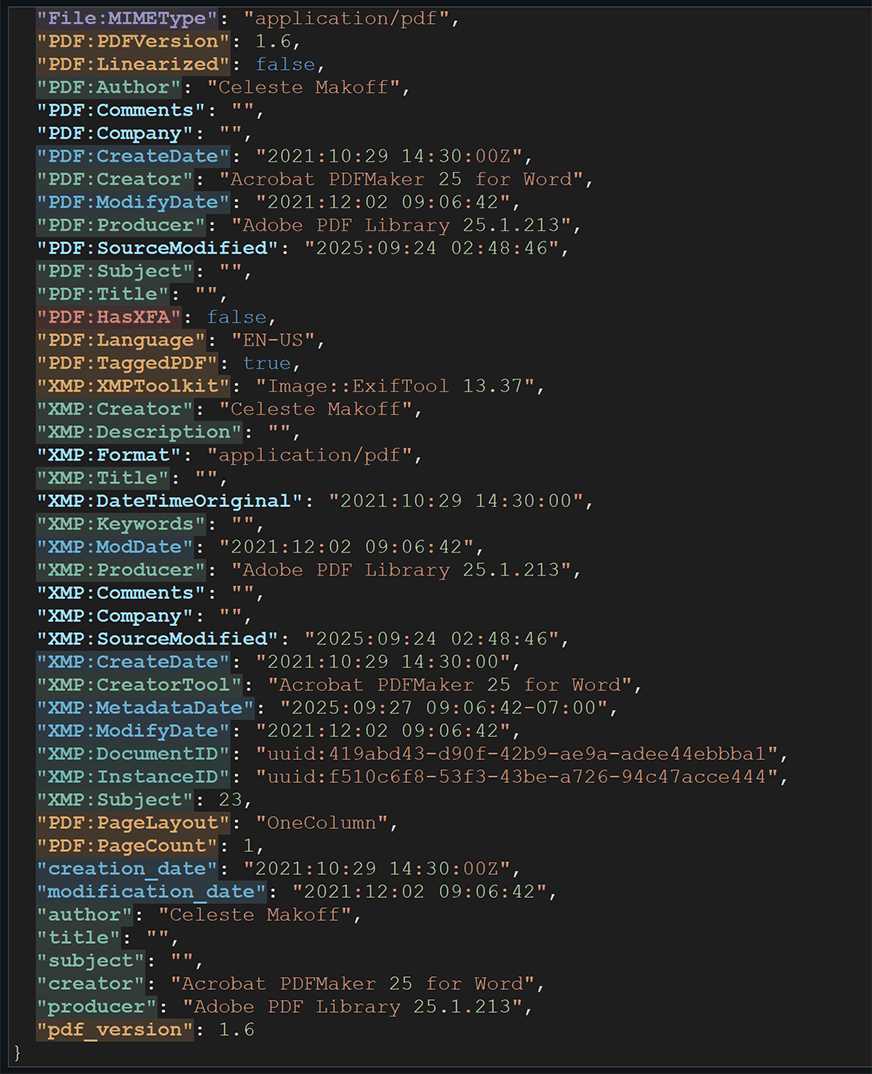
Metadata can reveal the hidden history behind a digital file—helping clarify when a document was created, how it was modified, and what software or devices may have been used. If a digital document is disputed or questioned, metadata analysis can help bring context to the facts.

When Would Someone Need Metadata Analysis?
Most people don’t think about metadata—until a digital document becomes part of a dispute, investigation, or legal matter.
You may need a forensic document examiner for metadata when a digital file is being questioned, such as a PDF, Word document, image, or scanned record, and you need help determining whether the file’s history supports (or contradicts) what someone is claiming.
Common situations include:
What Metadata Can Help Clarify
Metadata is often described as “data about the data.” In plain terms, it may provide technical details about a file’s background—sometimes confirming timelines, and other times raising new questions.
Metadata analysis may help identify:
Important note: Metadata can be informative, but it isn’t always conclusive. Some metadata can be missing, overwritten, or altered depending on how the file was handled. A proper analysis considers metadata in context, alongside the document itself and the surrounding facts.
Metadata + Traditional Forensic Document Examination
Kathy’s work stays rooted in forensic document examination, but metadata is a different type of evidence—digital rather than physical.
Metadata evaluation may be used alongside:
This approach helps ensure the digital side of a document isn’t overlooked when authenticity is being questioned.
Ready to work with Kathy?
When a document is disputed, you need clarity—especially when the stakes are legal, financial, or personal. Metadata analysis can provide another layer of insight into what happened behind the scenes of a digital file.
Kathy provides professional, careful analysis with clear communication, helping clients understand what the available information does—and does not—support.